


Functional-Performance Films / Anti-Reflective Films

Reduces glare!
Anti-Reflective Films
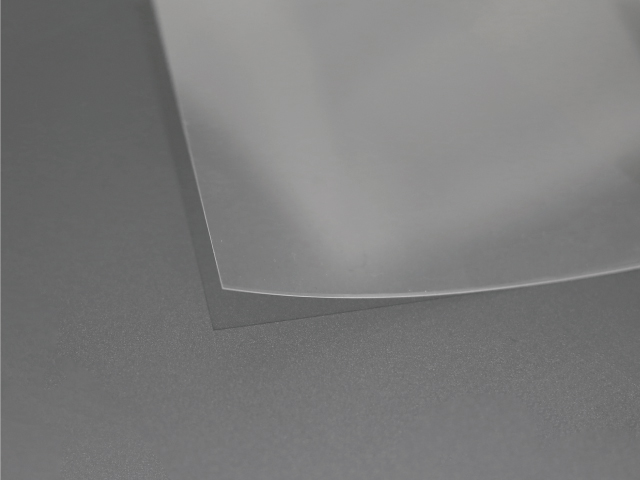
Anti-Reflective Films are films that reduce light reflection on the surface to enable clear and easy-to-see visibility. The lineup includes four types of films, allowing you to choose the best combination for each application and purpose.
Nakagawa Chemical's Anti-Reflective Films offer the highest level of Anti-Reflective Effectiveness! (Reduction of glare)
Anti-Reflective Films SF-1000 has the industry's highest level of reflectivity of 0.4%!
Anti-Reflective Films prevent reflections of external light on glass surfaces such as show windows of stores and artwork cases to improve visibility. It can make what you want to attract look more beautiful.
| Product code | Characteristics | Reflectivity | Size | Hard Coat |
UV rejection |
Shatter resistance | Exterior Application |
|---|---|---|---|---|---|---|---|
| SF-1000 | Lowest reflectance in its class exceptional glare reduction. |
0.4% | 610mm 1,220mm |
― | 〇 | ◎ | ― |
|
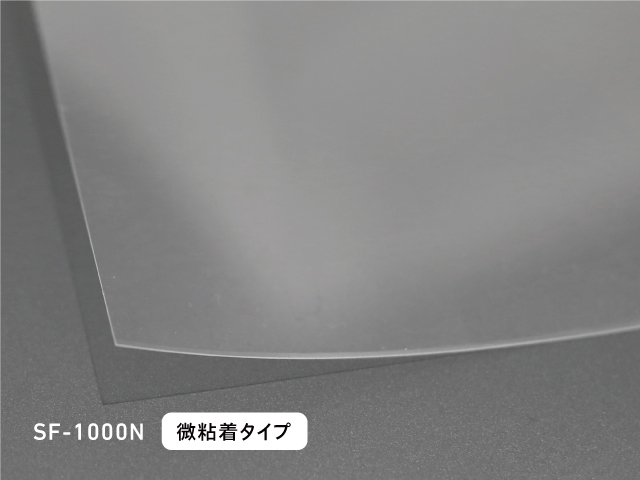
SF-1000N |
Lowest reflectance in its class Lowest reflectance in its class |
0.4% | 610mm 1,220mm |
― | 〇 | ― | ― |
| SF-1300H | Wide-width design minimizes seams and joints. | 0.9% | 1,220mm 1,500mm |
〇 | 〇 | ◎ | ― |
| SF-1520HG | Hard-coated for exterior application. | 1.5% | 1,250mm 1,524mm |
〇 | 〇 | ◎ | 〇 |
*1: SF-1000 and SF-1000N use Mitsubishi Chemical Corporation's "MosmiteTM" as the base film. Protective film is attached to the surface.
*2: Measured values when applied to both sides of 3mm-thick float glass.
*3: Measured values when SF-1520HG on one side and SF-1300H on the other side are applied to 3mm-thick float glass.
Catalog
-
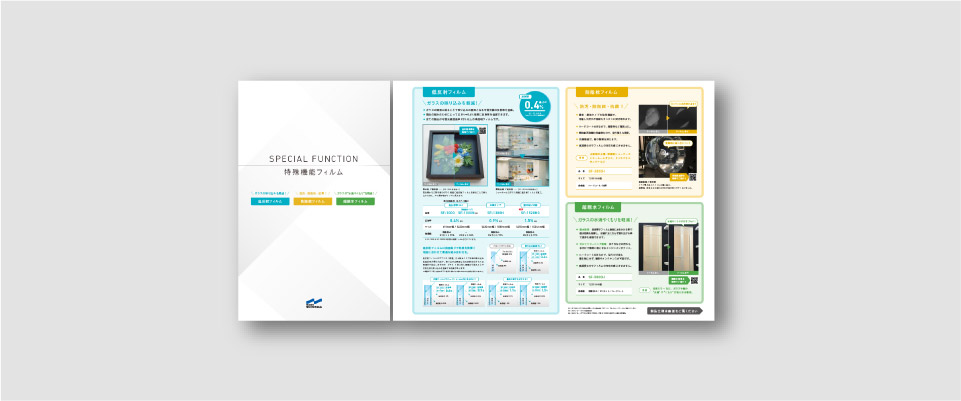
Functional-Performance Films
[Included series] Anti-Reflective / Anti-Fingerprint / Anti-Water-Droplet Films
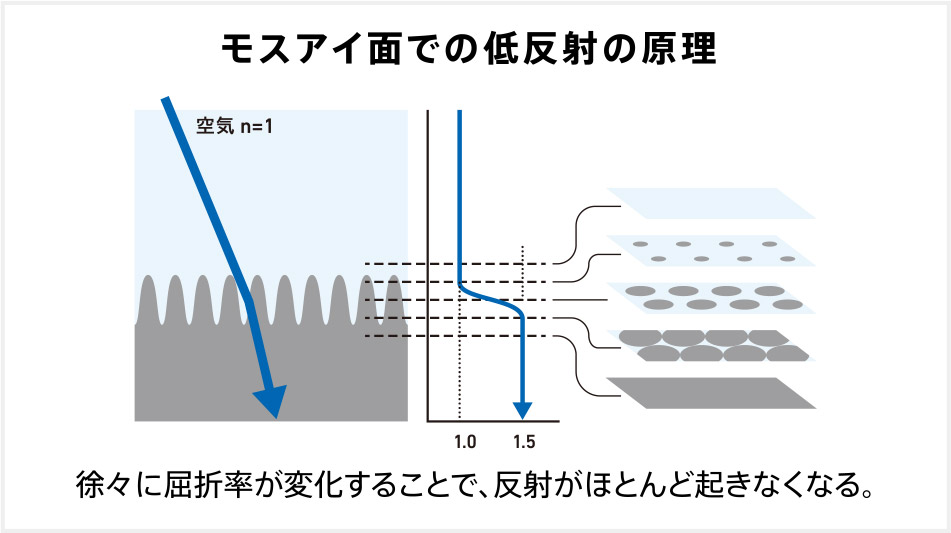
Principle of Low Reflection
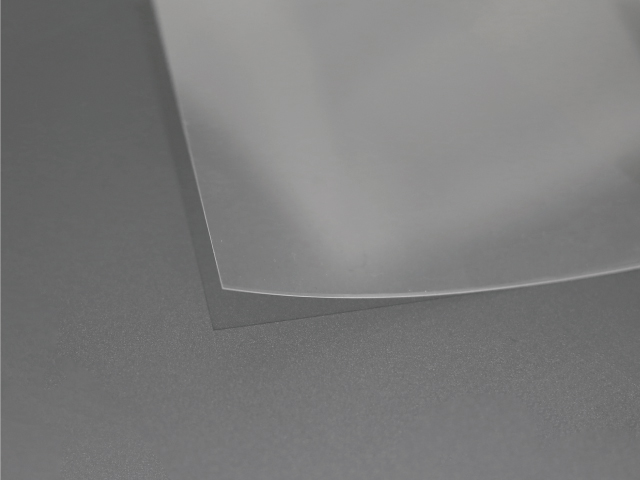
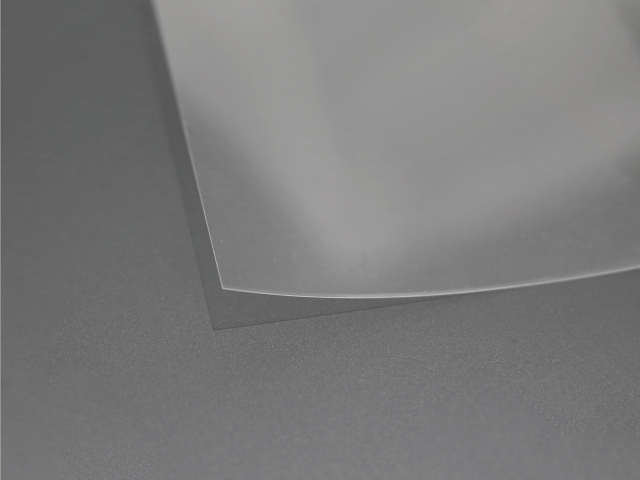
Highest level of low reflectivity with moth-eye structure
(SF-1000 and SF-1000N)
SF-1000 and SF-1000N achieve anti-reflection with a moth-eye structure. The moth-eye structure is a structure in which nano-level projections are regularly arranged on the surface like compound eyes of insects. These protrusions change the refraction of light in stages and suppress the reflection of light between the air and the film, thereby significantly reducing reflection. Since light does not bounce off the surface but is naturally drawn into the interior, the reflection of glass and acrylic is minimized and a transparent field of view is achieved.
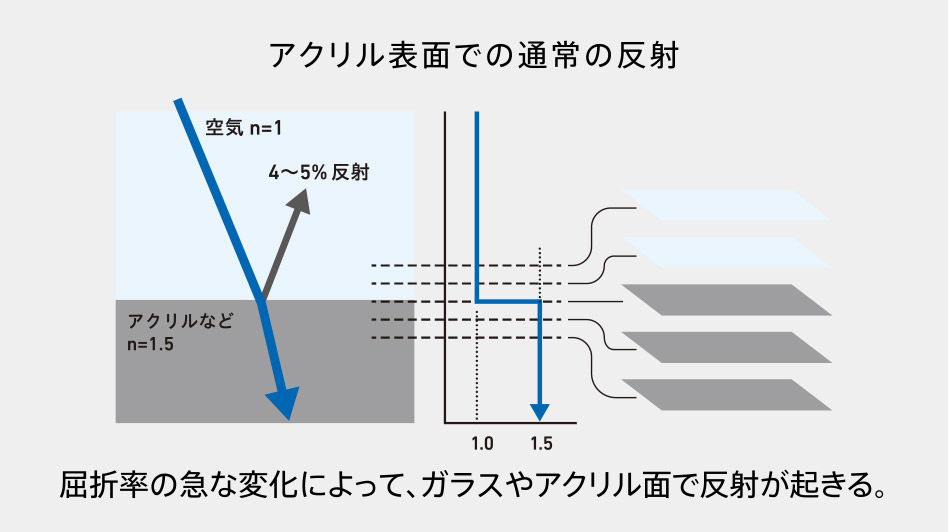
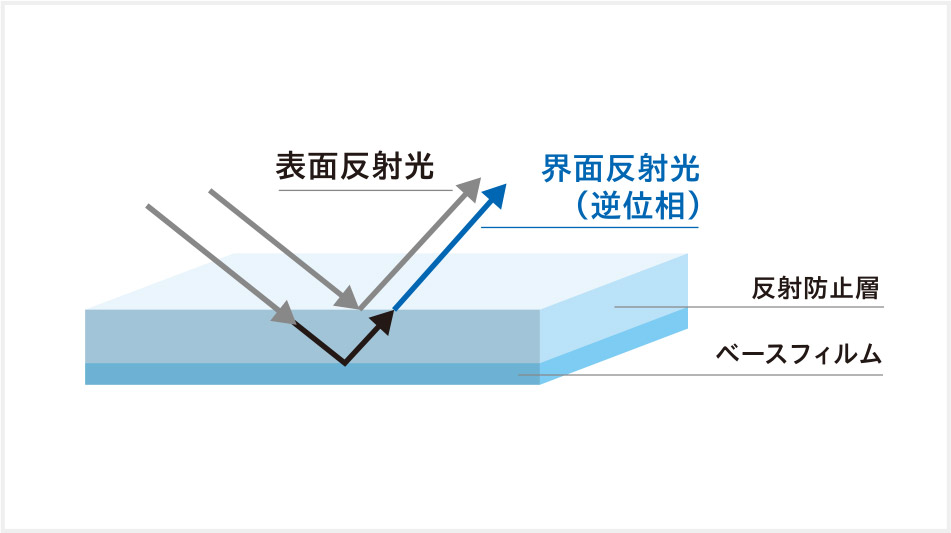
Special coating to cancel reflected light
(SF-1300HG and SF-1520HG)
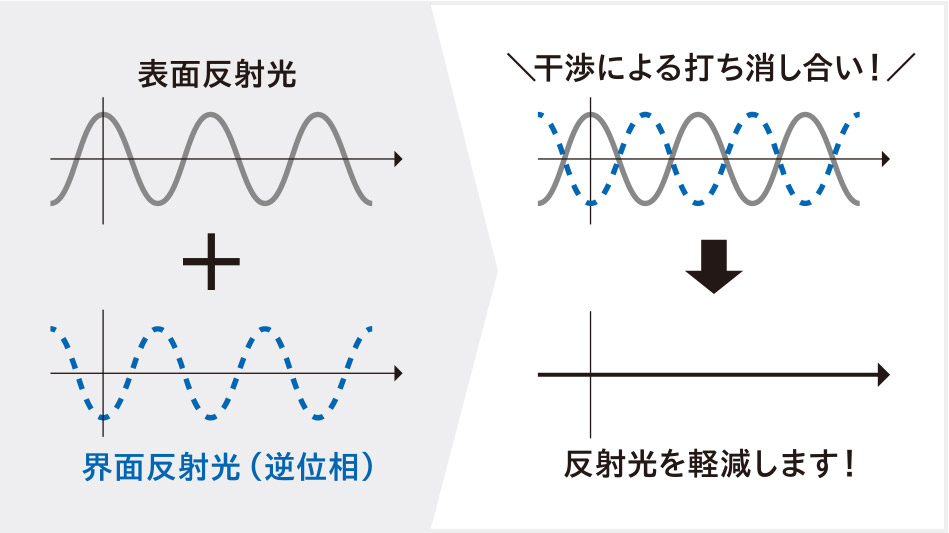
SF-1300HG and SF-1520HG are films with a hard low-reflection coating on the surface. This coating suppresses reflections by causing two reflection waves generated on the top surface and at the substrate interface to interfere with each other and cancel each other out. This "interference phenomenon" significantly reduces light reflection and effectively reduces reflections on glass and acrylic surfaces.
Optimal combination for each application
To achieve their original reflection reduction effect, apply Anti-Reflective Films to "both sides" of the glass, . Reflected light occurs on both sides of the glass, so applying on only one side is not enough to suppress reflections. Visibility will be greatly improved by applying the film to both sides of the glass. Each product has different features such as reflectivity, hard coating and outdoor compatibility, so it is important to select an appropriate combination depending on the application.
*If the product cannot be applied to the inner glass boundary, such as double-glazing glass, the original effect will not be achieved.
*Please contact us if you are considering laminating on resin sheets other than glass.
Example of combination
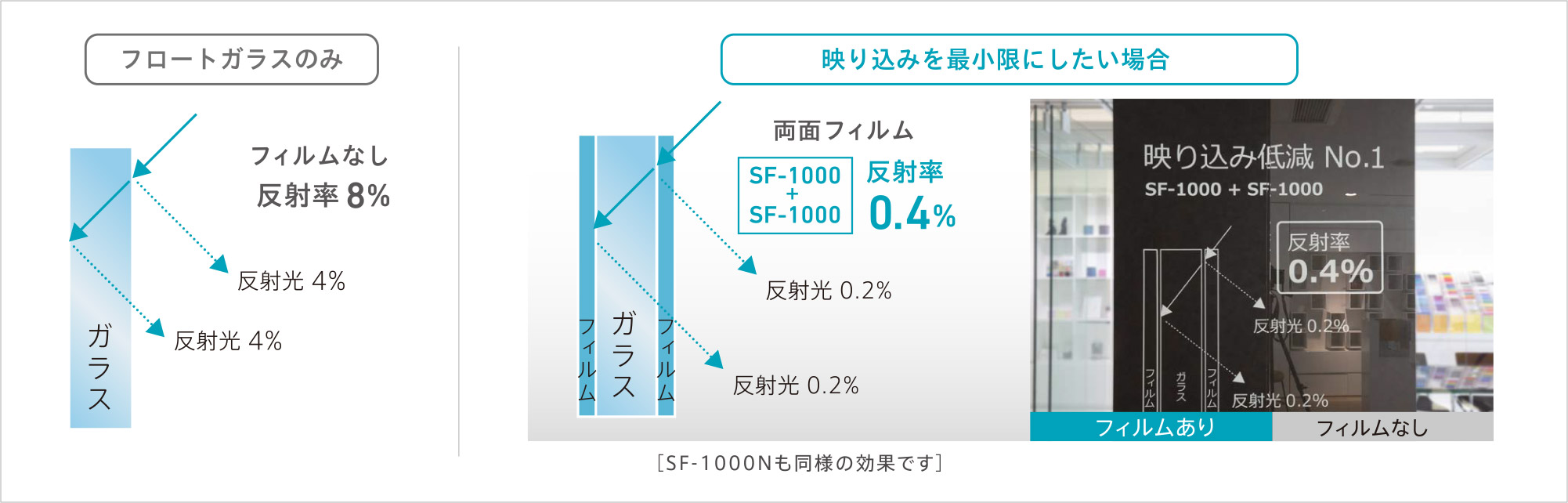
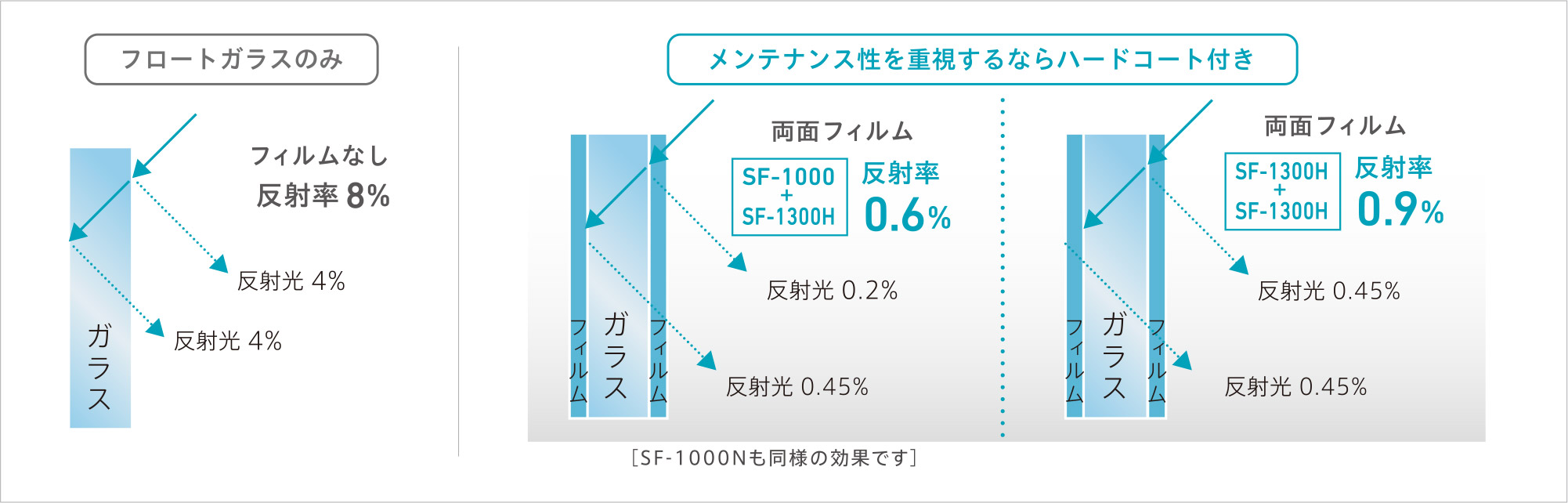
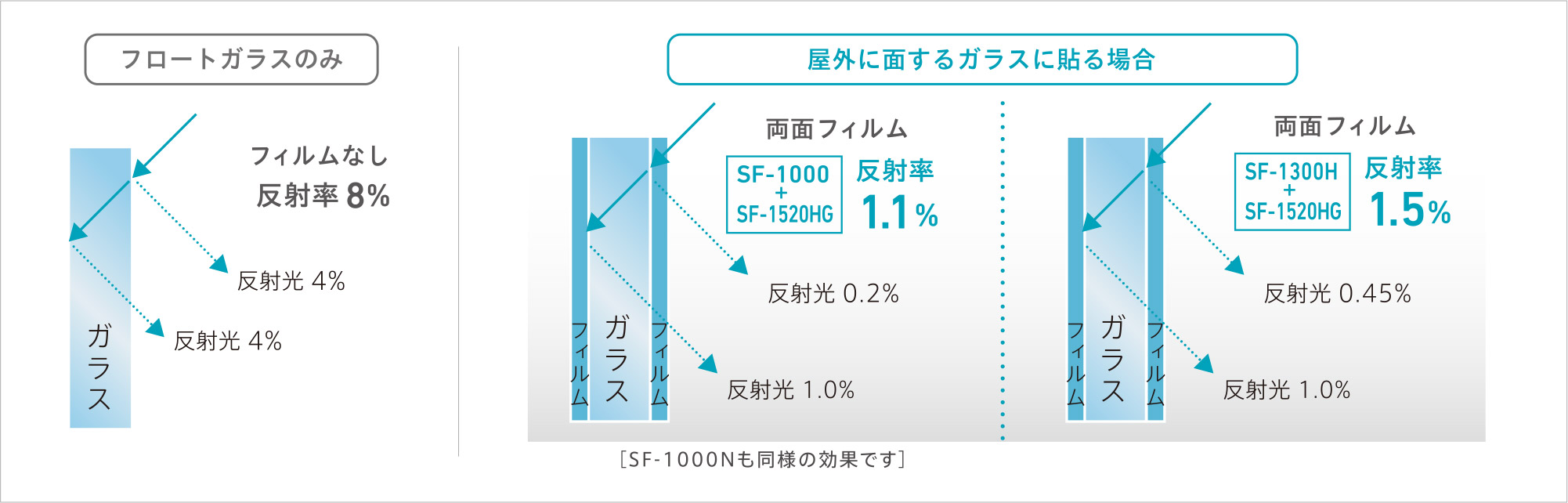
Case Study
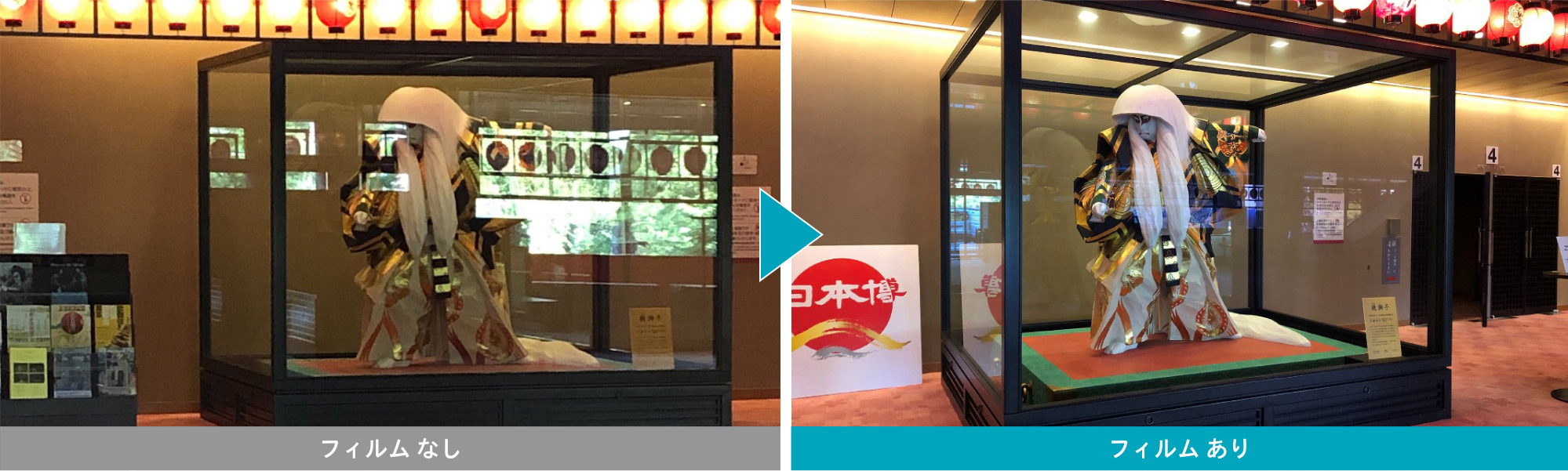
[Case Study]
National Theatre, Kabuki Theater
Anti-Reflective Film "SF-1000" was applied from both sides to the glass showcase of the wooden sculpture "Kagamijishi" by Hirakushi Denchu, which was installed on the first floor of the Large Theater of the National Theatre.
Anti-Reflective Films reduced the reflection of outside light and enabled the exhibits to be seen clearly.
*There is currently no "Kagamijishi" exhibit at the National Theatre of Japan. It is exhibited at the Ibara City Hirakushi Denchu Art Museum in Okayama Prefecture.
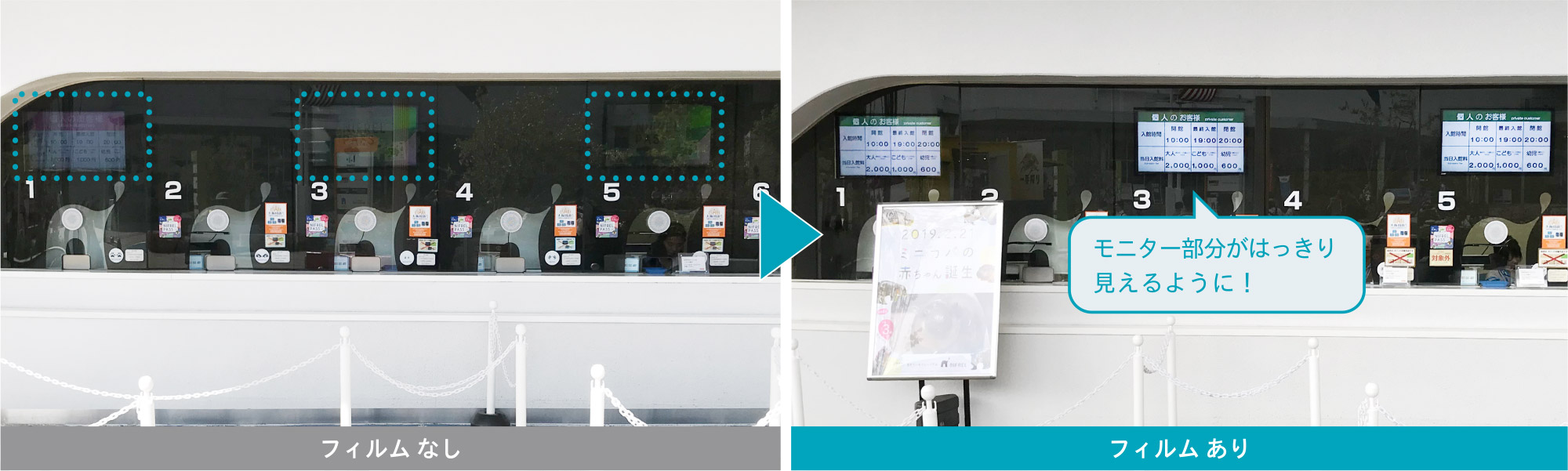
[Case Study]
nifrel
[Anti-Reflective Films were applied to both sides of the glass in front of the monitors in the ticket booth. By reducing reflection, the monitors can be seen clearly. *SF-1500HG is an old specification (current product: SF-1520HG)
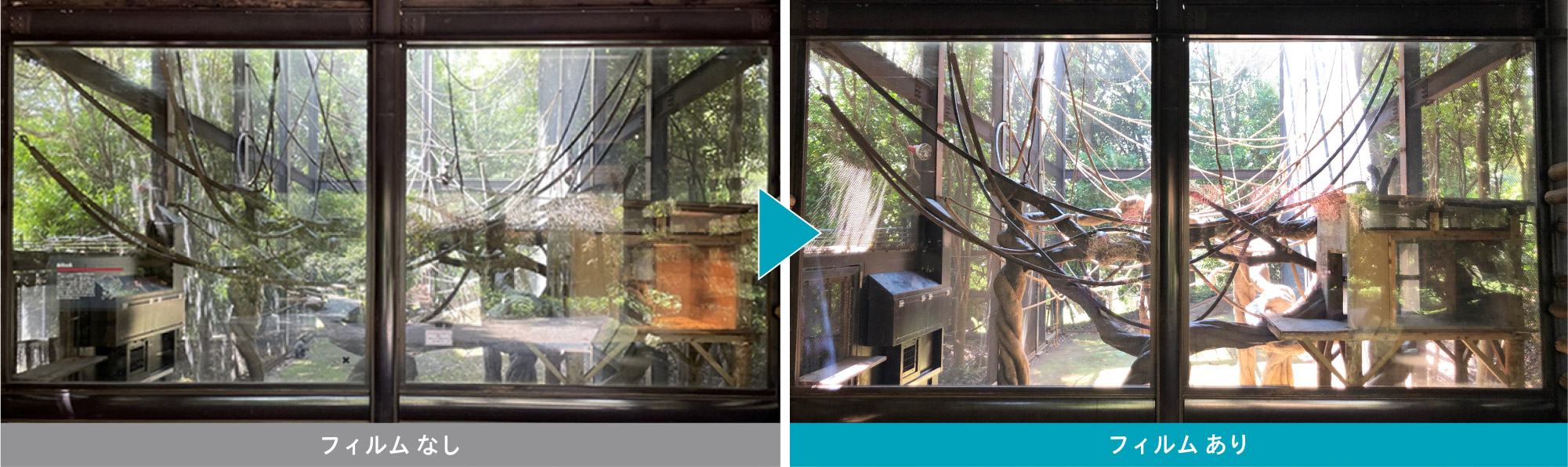
[Case Study]
Yokohama Zoological Gardens "ZOORASIA"
Woolly Monkey exhibit
Anti-Reflective Film SF-1500HG was applied to both sides of the glass in the Woolly Monkey exhibit. The reflection of the glass has been improved, making it easier to see the Woolly Monkeys.*SF-1500HG is an old specification (current product: SF-1520HG)
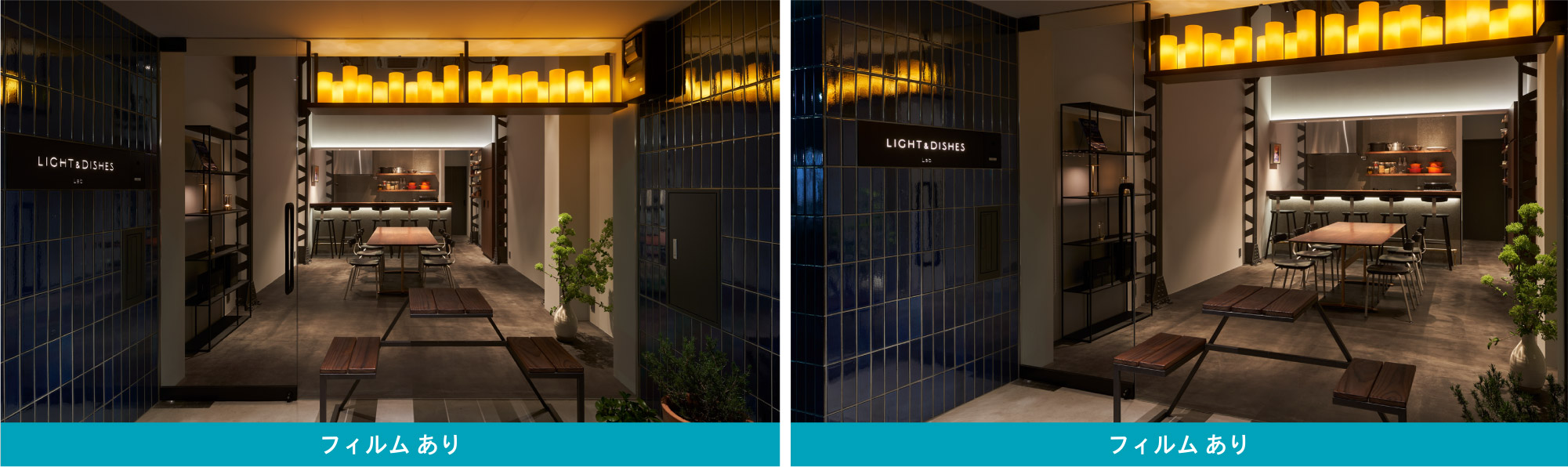
[Case Study]
LIGHT&DISHES Lab.
Anti-Reflective Films were applied to the front glass of LIGHT & DISHES Lab. in Fukuzumi, Koto-ku, Tokyo, where visitors can experience food and lighting. A combination of SF-1000 on the indoor side (back side) and SF-1500HG on the outdoor side (front side) was applied. *SF-1500HG is an old specification (current product: SF-1520HG)
Product Specifications
| Brands | Series | Product code | Product Specifications |
|---|---|---|---|
| Functional-Performance Films | Anti-Reflective Films | SF-1000/SF-1000N | Product Specifications [PDF] |
| SF-1300H | Product Specifications [PDF] | ||
| SF-1520HG | Product Specifications [PDF] |
Precautions for Use
To ensure correct and safe use, please read these precautions carefully before use and use the product with due care.