



Two Methods for Applying Decorative Sheets (Glass Surfaces)
This page introduces two basic methods for applying decorative film:
"wet application" and "dry application." We also explain the basic procedures and the pros and cons of each method, so please use this information as a guide based on your specific needs.
About "Wet Application"
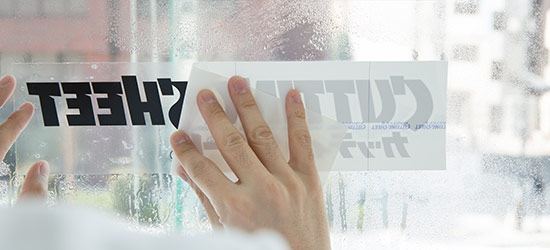
The method of applying decorative film using water is called "wet application." It is primarily used when position adjustment is necessary, or when working with materials such as transparent films where bubbles or unevenness are a concern. In this
example, we will apply cut-out letters that have been treated with re-tack adhesive to glass.
| ○ Advantages | You can adjust and correct the position while the water is drying. Recommended for large sheets. |
| × Disadvantages | It may take some time for the application to dry. |
4 Steps for "Water Application"
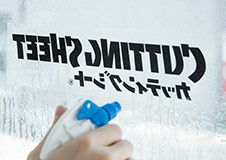
1. After thoroughly cleaning the application area, spray water over the entire surface.
First, thoroughly clean the application area using a squeegee or similar tool. Then, spray water over the entire application area and the sheet.
(Adding a few drops of neutral detergent to the water makes application easier.)
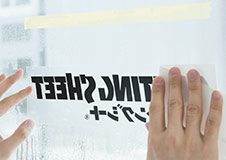
2. Apply the sheet while adjusting its position
Slide the sheet into place while adjusting its position. (If it doesn’t slide easily, add more detergent
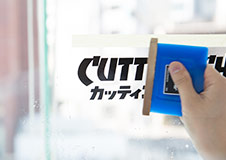
3. Press the sheet firmly while removing excess water
Once the position is set, use a squeegee to remove any water or air trapped between the sheet and the surface
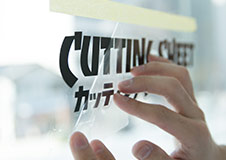
4. Peel off the release liner
Once pressed, slowly peel off the release liner. (If any air bubbles remain,
About "Dry Application"
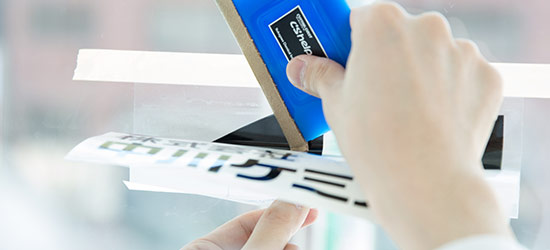
"Dry application" refers to the method of applying decorative sheets without using water, applying them directly. This method is primarily used for substrates or environments where water cannot be used. In this example
, we will apply cut-out letters that have been retack-treated to glass.
| ○ Advantages | Since no water is used, application can be completed quickly. Recommended for small cut-out letters, etc. |
| × Disadvantages | Once applied, the position cannot be adjusted. |
4 Steps for "Dry Application"
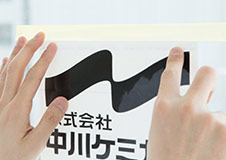
1. Determine the placement and temporarily secure it
Decide where to apply the decorative sheet, then use masking tape to secure the left and right edges of the sheet to the surface (for dry application)
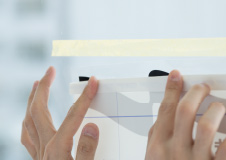
2. Fold back the backing paper
Peel back the backing paper slightly and fold it back
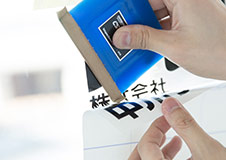
3. Use a pressure tool to press the sheet firmly into place
Use a pressure roller to press the sheet into place while simultaneously peeling back the backing paper
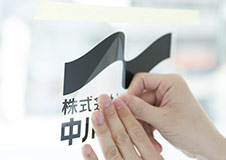
4. Peel off the release liner
Once pressed, slowly peel off the release liner. (If any air bubbles remain…)